Extracurricular Activities
Enriching Activities For Every Child
At Future Stars Infant School, we believe in holistic education that goes beyond academics. Our extracurricular activities are designed to unlock each child's unique talents, build confidence, and foster well-rounded development.
SWIMMING
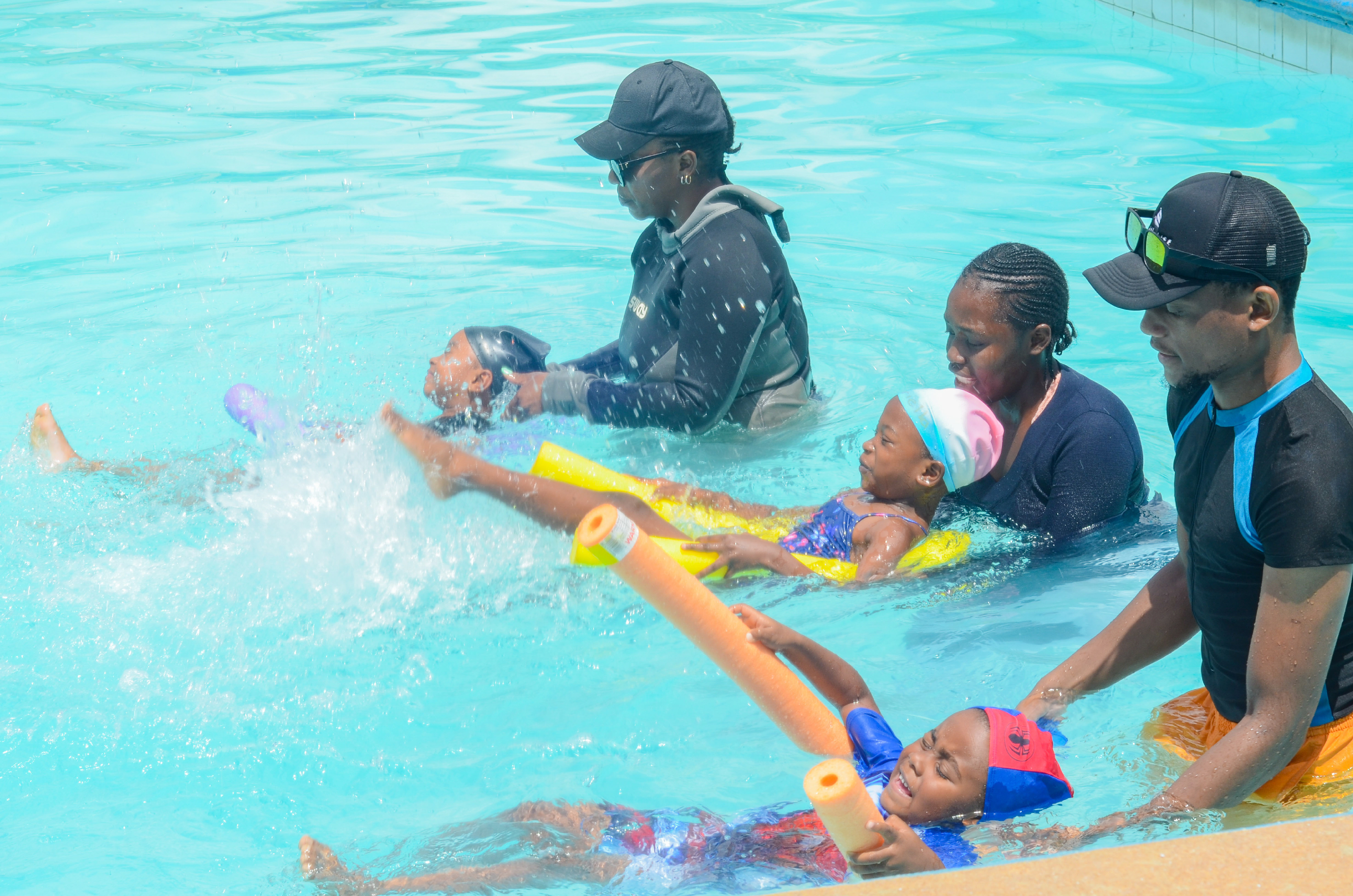
Swimming at a young age offers significant benefits, including full-body fitness, improved coordination, stronger muscles, better heart/lung health, enhanced confidence, and crucial water safety skills. While the skills are being developed, swimming provides mental wellbeing through stress relief and social interaction, making it a foundation for lifelong health and enjoyment. With our certified swimming instructors, the children learn that challenges such as learning to swim helps them to develop the confidence to persevere in difficult tasks.
In swim class, a child can learn that something difficult can be accomplished over time. Developing competence is a vital step in gaining the independence that children will eventually need to transition into adulthood.
BALLET
Witnessing the grace and power of professional ballet dancers on stage can be truly mesmerizing. But did you know that many of these talented performers began their training as young as age four? If you're curious about introducing your child to the world of dance, consider registering them at Future Stars Infant School to have them experience this.
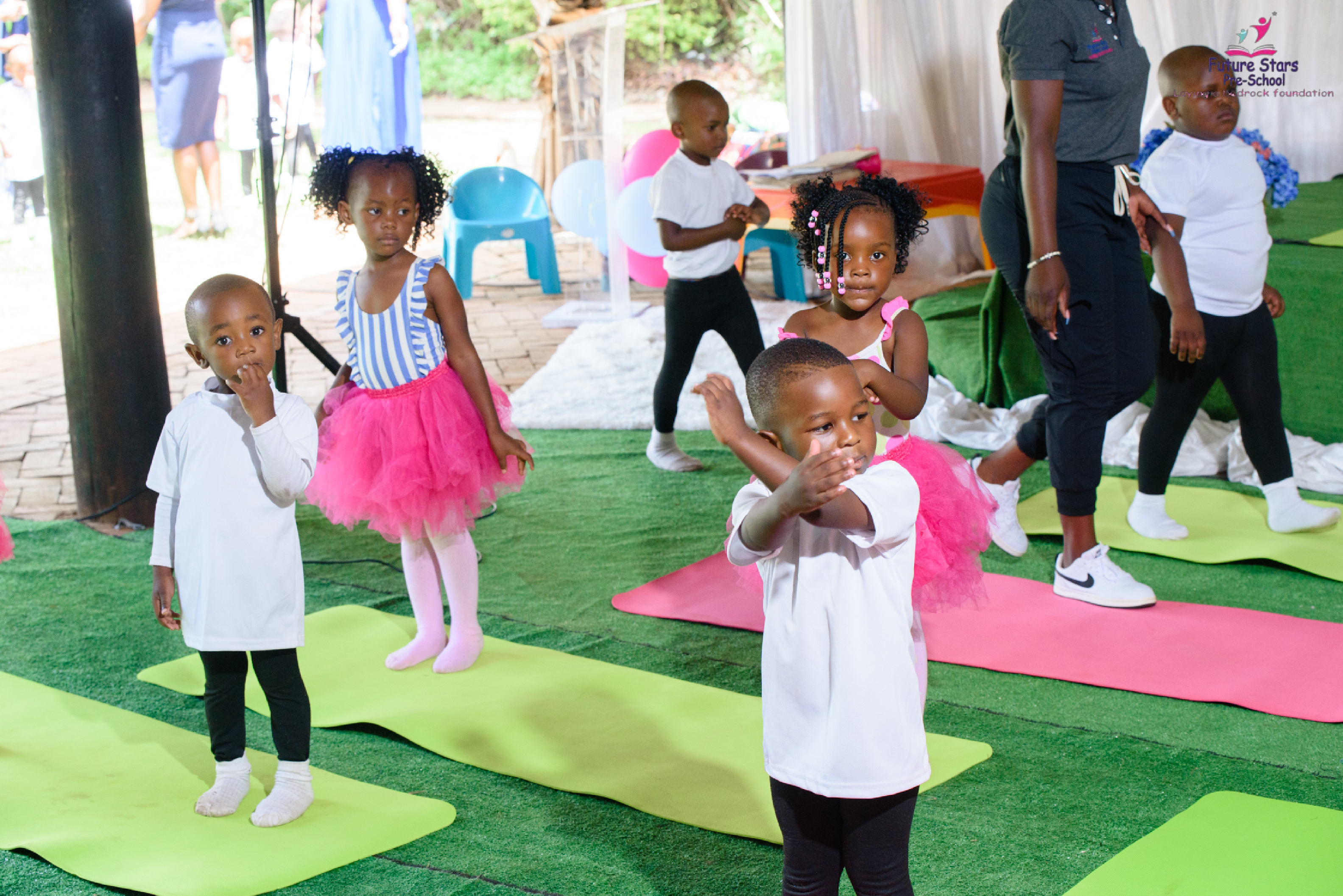
Ballet teaches kids to work together and support each other, dancing in one group. As children master new skills, they gain confidence and develop self-expression through movement and music.
Ballet introduces kids to the basics of music, teaching them to count along and move to the beat. At Future Stars, all dance classes feature music accompaniment, creating a unique and enriching learning experience.
Ballet instructors work alongside our teachers to teach each little dancer about keeping time and dancing to the rhythm. Children's ballet classes can also be a great way to boost memory skills.
As they have their lessons each week, little dancers have the opportunity to improve their memorization as they learn a wealth of positions, combinations, and steps!
GYMNASTICS
Gymnastics class is an exciting way to get kids active. As children can start gymnastics from an early age (as young as 2) it's a great sport for children to enjoy. While kids can start gymnastics as toddlers, at that age, it's more about developing body awareness and a love for the sport, as well as getting children familiar with the basic equipment.
Gymnastics, requires children to perform coordinated skills. Coordinated skills require both sides of the brain to work together on the same element of the activity. For example, while bouncing on a trampoline, children need to keep their feet together and apply the same amount of force to each leg, while also bouncing straight up and down. If their brain doesn't work in unison for this, the gymnast will lose their balance.
Gymnastics practice helps to build discipline and focus. By taking instruction from their coach and then applying the learning themselves, a gymnast not only makes good progress in their development, but they also learn about commitment and discipline. This is a positive way to instil life skills and healthy habits for children.
MARIMBA
When it comes to learning an instrument, many children gravitate towards the piano, guitar, or drums. However, there's one instrument that often gets overlooked, despite offering a world of unique benefits and musical joy: the marimba.
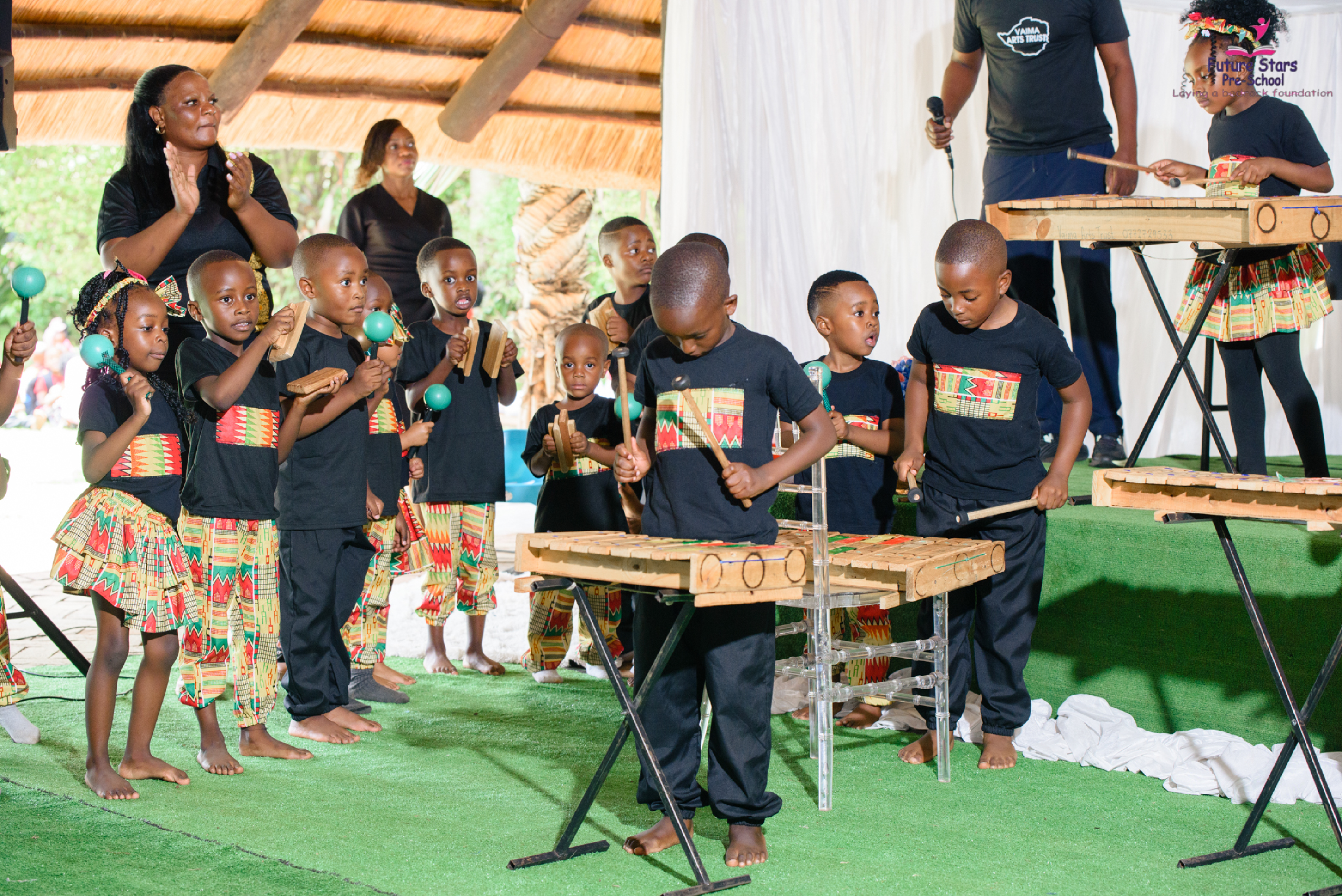
This fascinating percussion instrument, often described as a "xylophone with depth," has the ability to captivate young musicians with its warm tones and rich textures. One of the most immediate benefits of learning the marimba is its ability to develop a child's rhythm and coordination.
The instrument requires precision and timing, as players need to use both hands, often in different patterns and tempos. The marimba challenges young learners to use both hands independently while maintaining a steady beat. This bi-lateral coordination helps children enhance their overall motor skills, which can also carry over into other areas, such as sports and fine motor tasks.
Learning to play the marimba involves a combination of ear training and understanding pitch. Each bar on the marimba is tuned to a specific note, and players need to develop the ability to recognise and play these notes in harmony. This develops an acute sense of pitch and musicality.
Playing Marimba fosters creativity and musical expression through a versatile and dynamic instrument.
ZUMBA, MUSIC AND DANCE
Zumba is a popular class that combines elements of dance and aerobics. With their favourite music accompaniment, kids learn to move, listen to the rhythm, exercise their bodies, and improve their health. Zumba benefits their physical growth, also protects from many problems associated with a sedentary lifestyle.
There is always a friendly atmosphere. It helps kids to relax and enjoy lessons. It is the main difference to other sports classes, where there has to be more strong discipline. Kids develop new movements with a comfortable atmosphere and after classes going home happy.
Each lesson is conventionally divided into four parts. In the beginning, a warm-up is required with stretching exercises. It is necessary to prepare the student for the fundamental elements of the program. Then the trainer shows the movements, the children repeat and master them. Further, activities are performed to the music. In the final part of the lesson, stretching exercises with elements of breathing are used to relax.
It develops creative thinking and artistry. The child learns to show imagination. The kids develop their communication skills by interacting with other children. And they make new friends. By getting some success, the child's self-esteem rises. They learn to respect yourself and love their own body. It develops "an ear for music." Kids learn to listen to music and move in rhythm.
PUBLIC SPEAKING AND READING
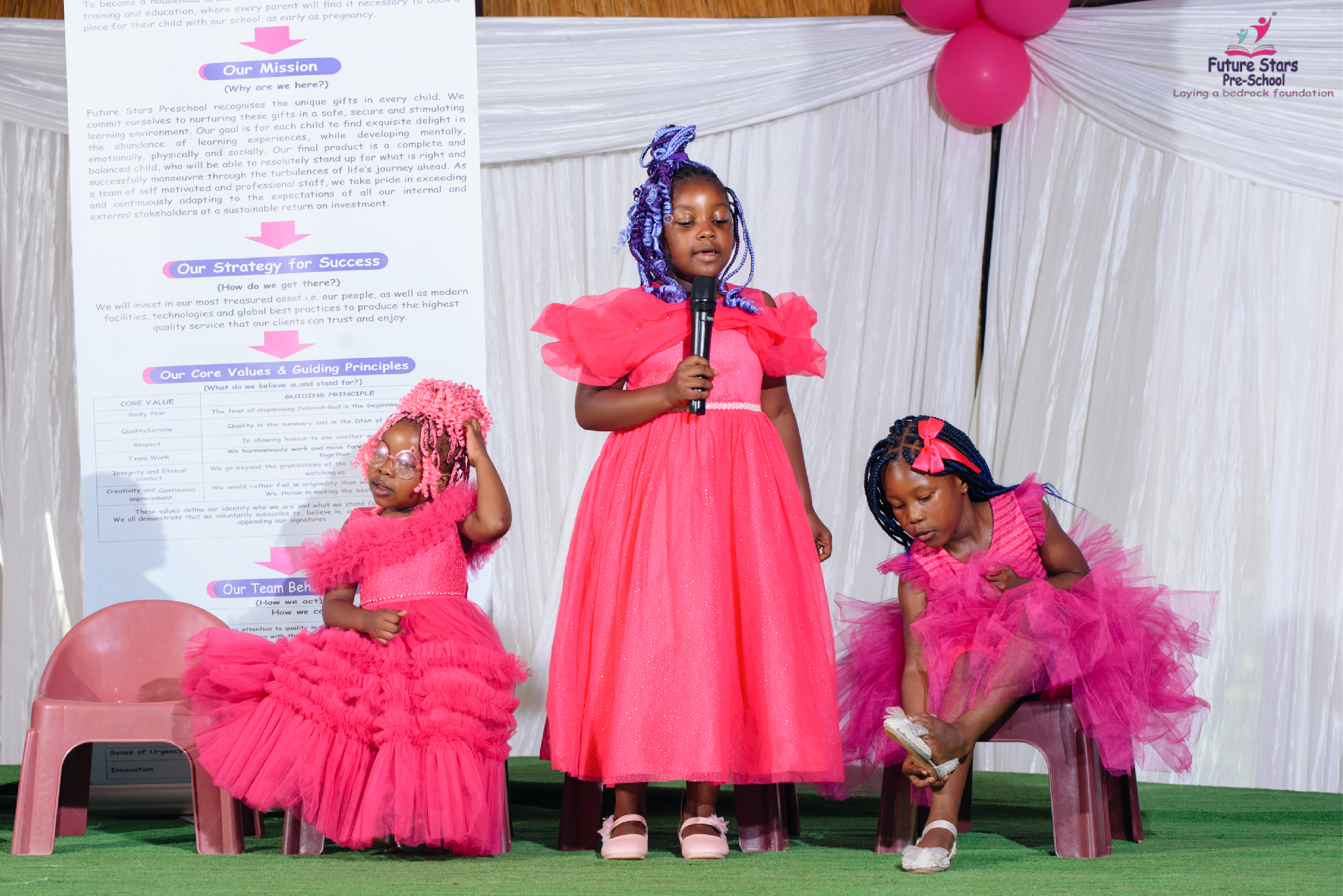
Public speaking is often considered an essential skill for adults, but did you know that its benefits extend to children as well? Introducing public speaking at an early age can have a profound impact on a child's personal, academic, and social development. From improved confidence to enhanced communication skills, mastering this skill can set children on a path to success.
Storytelling sessions are a fantastic way we use at Future Stars to help children practice organizing and expressing their thoughts. We encourage them to share stories during "circle time" or to participate in classroom show-and-tell activities.
Repeated public speaking practice exposes children to new words, which naturally enriches their vocabulary. It also gives them the opportunity to refine their pronunciation and improve their overall verbal clarity. Activities such as reading aloud, spelling bees, and vocabulary games work well to achieve these improvements. As teachers provide feedback during class presentations they guide the children toward correct pronunciation.
Strong public speaking skills are invaluable in the professional world. By developing these skills early, children gain an advantage in fields that require persuasive communication and leadership.
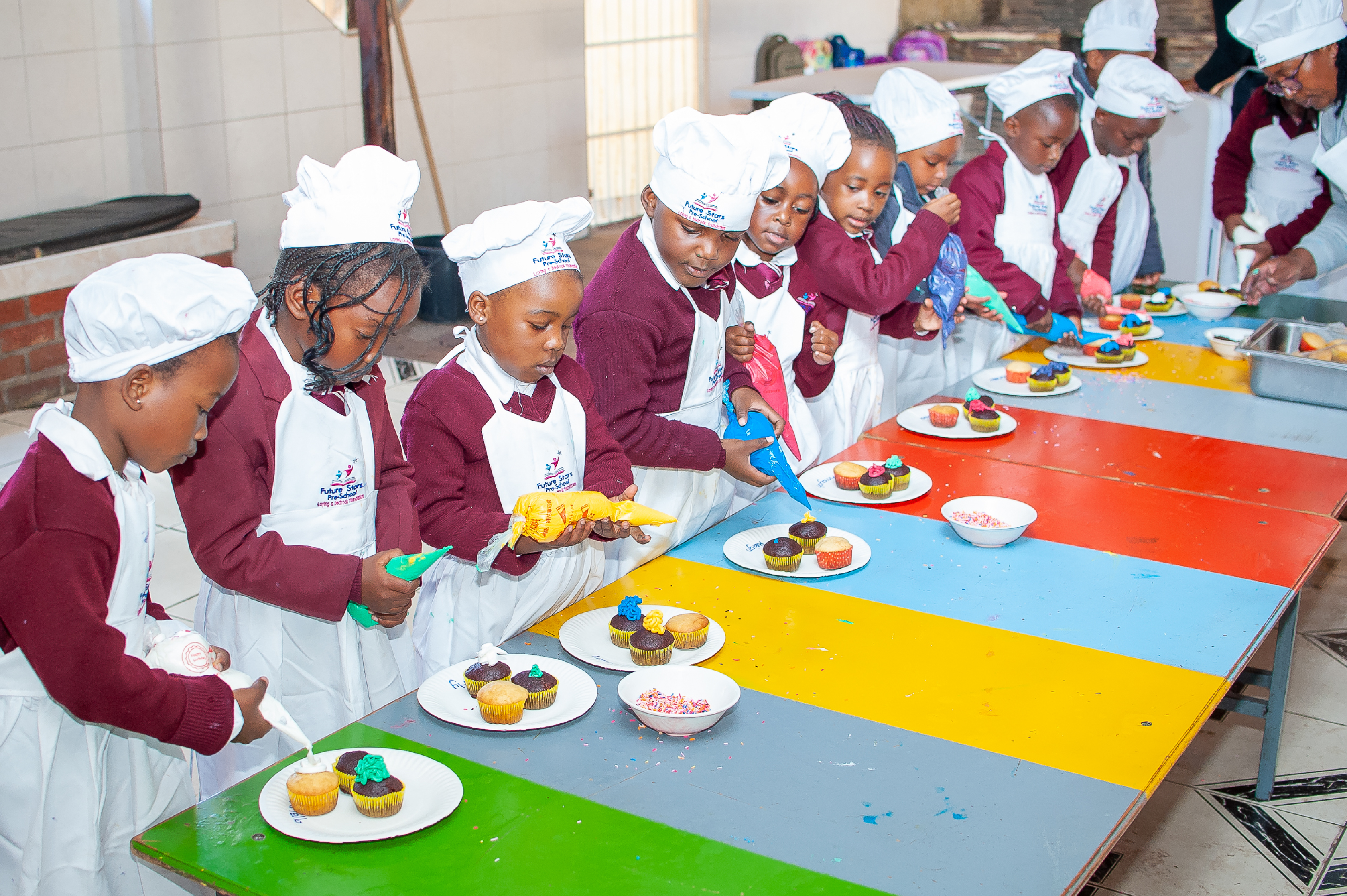
COOKING AND BAKING
When it comes to raising an adventurous eater, it is not just about coaxing kids to eat their vegetables. Bringing up a child who can enjoy a sadza as much as a cupcake takes patience and persistence, but it does not have to feel like a chore.
Cooking is a hands-on experience which engages all the senses; children feel textures, smell different flavours and spices, see colours change, and taste new things. Sensory experiences are strongly linked with an increase in vocabulary for young children, as they work with educators to identify when a texture is smooth, sticky or crunchy.
Baking offers many opportunities for children to work on their motor skills. Pouring liquids requires careful hand and eye coordination and kneading dough strengthens muscles. Whipping, creaming and rubbing in all use different movements and muscle groups. A baking session makes an excellent work out!
Baking gives children a real sense of achievement. Working on a task which produces a product that they can enjoy and share with others, gives them a real confidence boost. If a child lacks confidence, it's worth starting out with simple and easy-to-follow recipes.
GARDENING
The nutritious bounty and natural beauty of gardens cultivated by young ones support the health and well-being of kids of all ages. Gardens are an ideal place for learning and provide unlimited opportunities for educators. When children grow food, they're much more likely to eat it. And when we give them opportunities to share the bounty, they practice compassion and generosity toward others.
Gardening relies on a certain level of scientific and mathematical reasoning. Measuring the space between plants or choosing the perfect spot for a plant based on the amount of sun it needs are both STEM-related skills. Plants are living things that need water and nutritious soil to grow. So are the insects that live amongst the plants. Gardening is an opportunity to learn about the life cycle, another important STEM skills.
Gardening doesn't bring instant gratification. You plant a seed and then wait for it to grow. It can be weeks before you can enjoy the fruits of your labour. From this, children get invaluable lessons in patience. They also learn listening skills and how to follow instructions. While gardening can be great to do as a solitary activity, when children garden with their peers, it also helps them to develop their interpersonal skills.
INFORMATION AND COMMUNICATION TECHNOLOGY
Firstly, young children are already being exposed to ICT tools and as such it already influences them and, on the environment, and people that surround them. ICT tools are becoming a ubiquitous component of the physical and social world. It is an important part of the private and work-life of most people, including young children.
ICT improves concentration and comprehension. The activities carried out through digital and interactive tools increase our students' concentration and, therefore, they assimilate concepts more quickly, enhancing learning. This type of tool involves students in more practical learning, with the aim of reinforcing what they have learnt.
At Future Stars we have realised that language development is greatly enhanced when ICT is employed in learning environments. ICT tools and resources such as word processors may appear to be very basic but remember the power of word processing is in the ease in which children can easily edit and change their writing whilst developing their language and literacy skills.
TRIPS AND EXCURSIONS
Students learn best when they can see, hear, and experience things firsthand. Opening students' eyes to bigger concepts is a crucial part of education, and school trips answer the requirements of all five senses.
Traditional classroom learning, while effective for some, may not suit every student's style of understanding. School trips cater to different learning preferences by providing hands-on, sensory-rich experiences. Whether a student learns best through visual observation, physical activity, or real-world interaction, educational trips allow them to absorb knowledge in a way that resonates with them - ensuring no student is left behind.
One of the most rewarding aspects of school trips is watching students put their classroom knowledge into practice. For instance, a lesson on domestic animals and how to care for them comes to life when the children get to visit a farm. Once they get to see how cows are milked, how ducks are fed and how a pigsty is kept clean enables them to reconcile theoretical knowledge with real life experience. These real-life applications reinforce what they've learned and build their confidence in using it.
School trips are often some of the most cherished experiences of a student's academic life. Many adults fondly remember their favourite school trip, whether it was visiting a museum, exploring a zoo, or travelling to a new city. These memories not only hold sentimental value but also serve as a reminder of the joy and curiosity that learning can bring